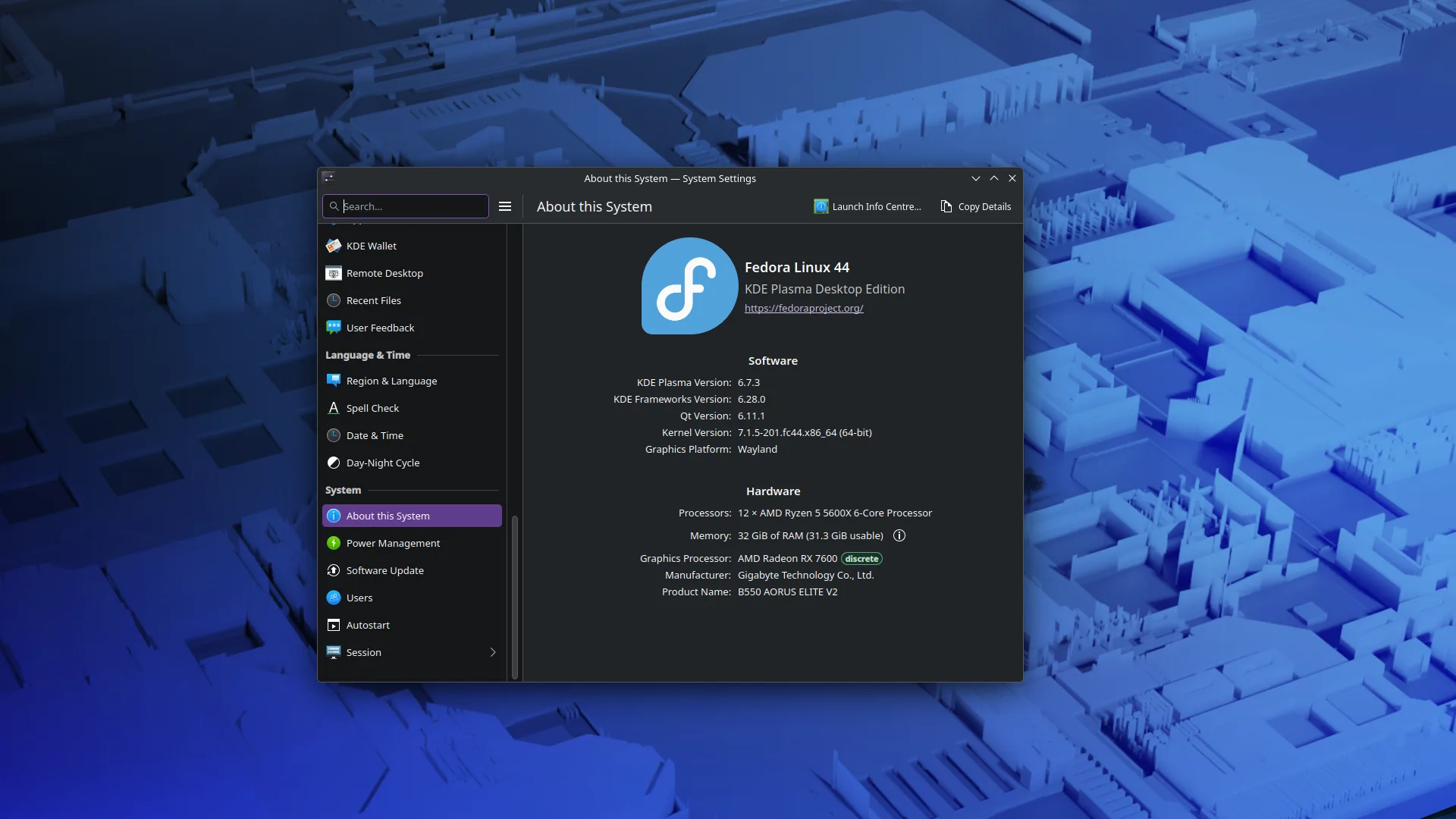
Two years into full-time Linux and I’m finally burning the distro-hopping cycle. I fell for the Arch/AUR trap for a while, but I got tired of spending my weekends debugging file manager crashes instead of maintaining my home lab.
Switched back to Fedora, and it’s boring in exactly the way I need it to be. It’s a stable launchpad for my projects, not the project itself.
I did the same thing. Settled om Baazite
Me too, on all my desktop PCs. Aurora on my work laptop. Ublue rocks.
I have been on this Linux jam since 1996 with a CD copy of Red Hat that came with a magazine (Byte, maybe?). In 2018 I made the jump to Debian based distros specifically because I got tired of the surprises. Now my lab runs LMDE. The only thing more stable and boring is Debian Stable itself.
Like you said, I want to focus on my projects, not have the OS be my project.
it’s kind of strange hearing about all this stability and everything on debian stable (and lmde by extension), when it was constantly broken for me and i had to do all kinds of weird fixes
i have a lenovo thinkpad t490s too so it’s not like im running on brand new components or anything either
been running fedora kde for a few months and it’s been running like a dream
That is strange.
it is!
i’m wondering if i have some special version of the t490s cus thinkpads are supposed to co-operate well with linux
fastfetch says the host is “20NYS0FU00 (ThinkPad T490s)” if that rings a bell to anyone
Don’t get comfy, I used to be fedora, then debian, then arch. Mint + Cinnamon is my final resting place.
I fell for the Arch/AUR trap for a while, but I got tired of spending my weekends debugging file manager crashes instead of maintaining my home lab.
What sort of file manager crashes were you having?
Right mouse click, it was an intermittent issue and never did get to the bottom of it as the only forum posts I could find were from 10 years ago. Yes I know I could of used the keyboard shortcuts but my muscle memory is more mouse orientated than keyboard lol
Fedora for fun, OpenSUSE for work.
Debian for server, NetBSD for tinkering
I don’t do either of those things tho
Then OpenSUSE for everything else
NixOS for everything except my phones (one clean iPhone with Lockdown mode enabled and one Pixel 9a with GrapheneOS).
I’ve recently had some issues with Fedora (KDE). After I install any update it tells me to restart to finish installing. So I restart and it still tells me the same thing. Probably time I distrohop again.
With the usual restriction of “either upstream or Mint, otherwise you’re doing it wrong”. There are 6 options. Ubuntu is obviously out. Arch is not my cup of tea. Fedora is already ruled out. Debian/Mint aren’t as secure as Fedora/OpenSUSE. That leaves me with going back to OpenSUSE Leap.
But the proprietary media codecs on OpenSUSE come from the AUR … looks like I’m out of options.
What’s the security issue with Debian and Mint? Debian is usually my goto but I don’t want to expose myself to security issues
Linux in general is not secure for desktop users. There’s basically never sandboxing, and when there is it’s usually weak, antivirus is rarely used, and developers aren’t vetted as stringently as with paid software. Apparently Fedora and OpenSUSE take these issues more seriously, and SE Linux does somewhat restrict what malicious things a piece of software can do.
It’s a pretty widely held view that Fedora and OpenSUSE are more secure than Debian, Ubuntu, and Arch for desktop users but I’m not really an expert so I’m mostly retroactively justifying what I’ve heard second-hand.
There’s also https://secureblue.dev/
Tried it. Firstly it wouldn’t install. Secondly, the developer lead developer is a very private person and I don’t trust a Linux distro made by someone who is so secretive.